MET Storage Reckrod - Case Study
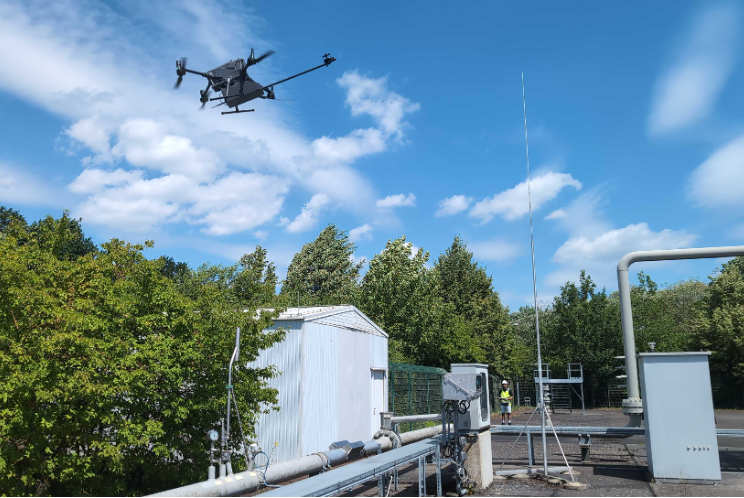
Across the German gas storage and midstream sector, operators have been preparing for the EU Methane Regulation with a seriousness that deserves more credit than it gets. Leak detection programs are running. Component-level inventories are maintained. Teams know their assets. When we arrive on site, we almost never fix a gap. Instead we are independently confirming that the work has already been done properly. MET Storage Reckrod is a good example of that.
The real cost of methane monitoring is not the campaign
Here is the part that rarely gets discussed honestly. Methane monitoring is not technically difficult to sell. It is operationally expensive to endure. A monitoring campaign, done badly, means weeks of coordination calls, engineers pulled off their actual jobs, site access negotiations, safety briefings for a crew that will be wandering your facility for days, and then months of waiting for a report.
For an operator running a live storage facility, that is the actual cost. So when we designed how AIRMO runs campaigns, the constraint we set ourselves was how little of our customer's time do we need to take?
What that looked like at Reckrod
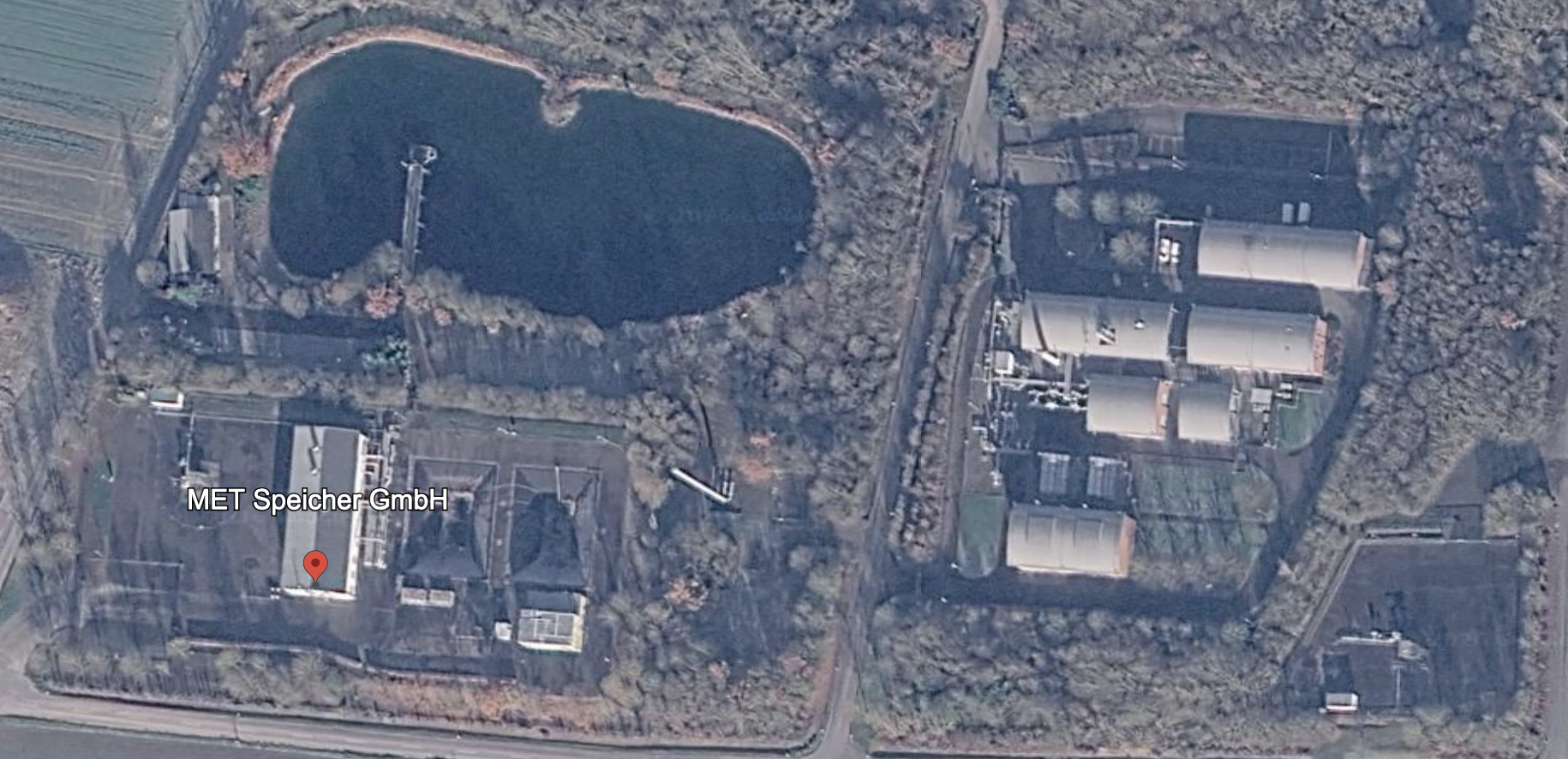
MET operates an underground gas storage facility at Reckrod with several distinct asset nodes across the site — storage caverns, a compressor building, and a cold flare. They needed a site-level measurement of total facility emissions, and they needed it reconciled against the component-level leak data their own LDAR programme had already produced.
1. Preparation. We drafted a site-specific concept of operations for a drone-based campaign. Flight planning, airspace, safety, sequencing — all handled on our side. MET's involvement: two calls.
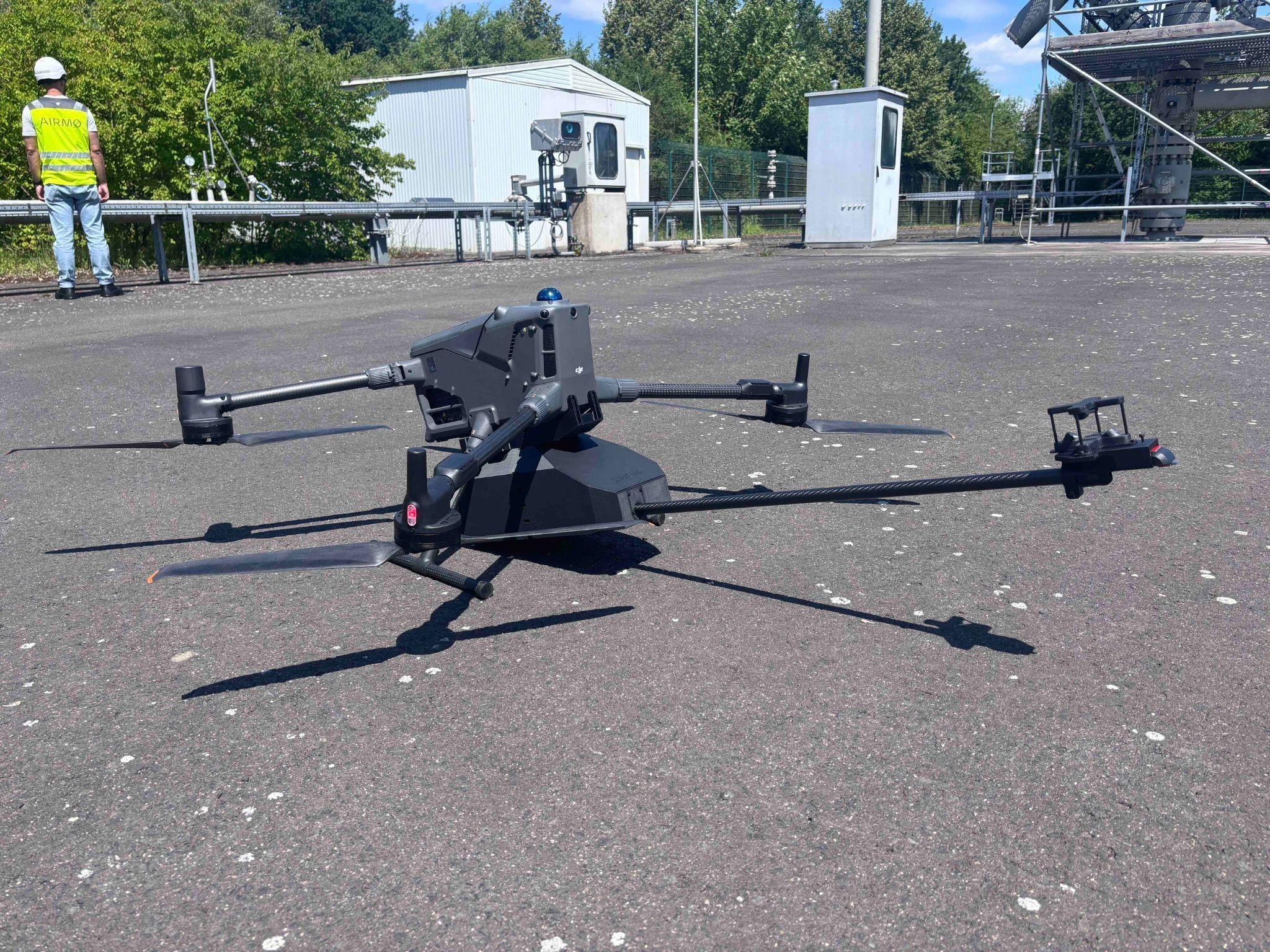
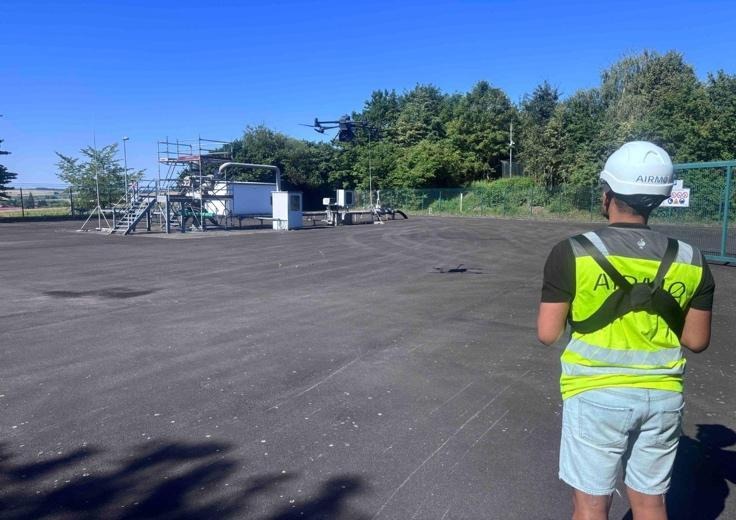
2. Execution. One day on site. Our team flew a series of drone measurements around the full site perimeter, capturing every asset node in a single campaign. No production interruption. No site shutdown. The MET team went about their normal day.
3. Delivery. Two reports — a site-level emission assessment and a full reconciliation against MET's own component-level data — delivered within two weeks of the campaign, followed by a client review window.
"My main concern going in was disruption. Measurement campaigns often mean weeks of coordination and technicians pulled away from their actual work. This involved only two preparation calls, one day on site, and reports delivered to us two weeks later. The facility ran normally throughout; from an operations standpoint the campaign was close to invisible."
Benjamin Lübbers, MET Storage Reckrod
What the campaign found
The site-level measurement came back statistically indistinguishable from zero. No asset node exceeded the detection threshold. More importantly, the top-down measurement reconciled with MET's bottom-up inventory within measurement tolerance. Every leak their own programme had identified was accounted for. Nothing was hiding. That is the outcome that actually matters. Not "we found something" — but independent, defensible confirmation that MET's existing leak detection programme is complete, and that there are no uninventoried emissions slipping through the gaps.
For an operator, that is worth more than a dramatic finding. It is proof that the system they have already invested in works.
Why this matters now: the regulatory context
Regulation (EU) 2024/1787 (the EU Methane Regulation) entered into force in 2024 and progressively imposes measurement, reporting and verification obligations across the European energy value chain. Article 12(3) requires operators to move beyond generic emission factors toward direct, source-level and site-level measurement, with reconciliation between the two.
In parallel, OGMP 2.0 (the UN Environment Programme's Oil and Gas Methane Partnership) defines the reporting framework that most serious European operators are now targeting. Level 5, the Gold Standard, requires exactly what MET has completed. It's a site-level measurement reconciled against a source-level inventory, with the discrepancy quantified and explained.
The distinction matters. Source-level (bottom-up) data tells you what you have found. Site-level (top-down) measurement tells you what is actually leaving the facility. Level 5 asks operators to prove those two numbers agree. Because when they diverge, something is unaccounted for.
Independent measurement stops being a nice-to-have. A reconciliation is only credible if the top-down number comes from someone other than the party producing the bottom-up number.
The takeaway
We covered OGMP 2.0 Level 5 and the EU Methane Regulation requirements in one day on site. Most German operators we work with already have their leak detection running properly. The gap is verification — getting an independent number without giving up two weeks of your team's time. That is what we do.